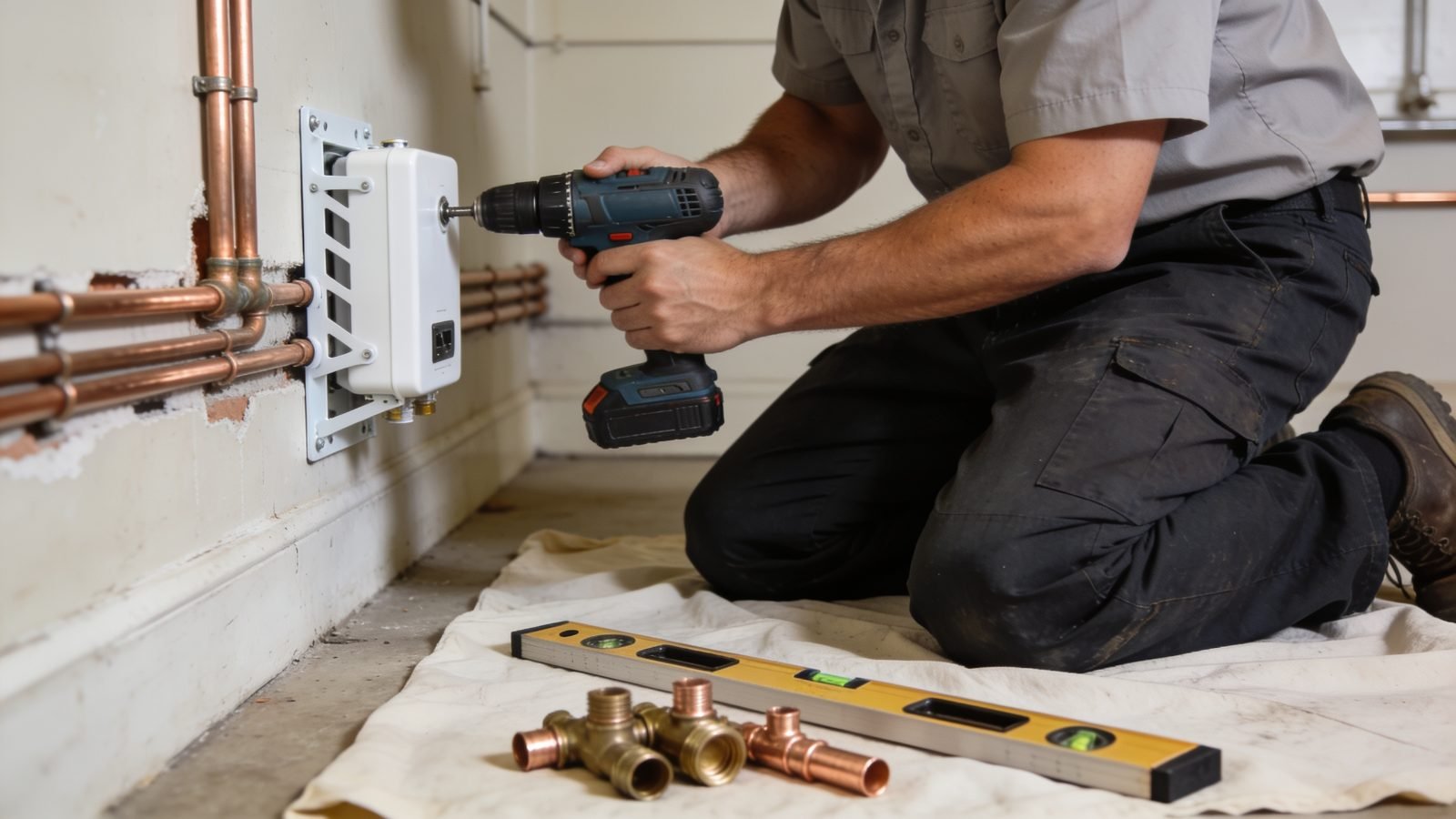
Tankless Water Heater Installation
New tankless units installed, sized and permitted — gas or electric, garage, closet or exterior wall.
Learn more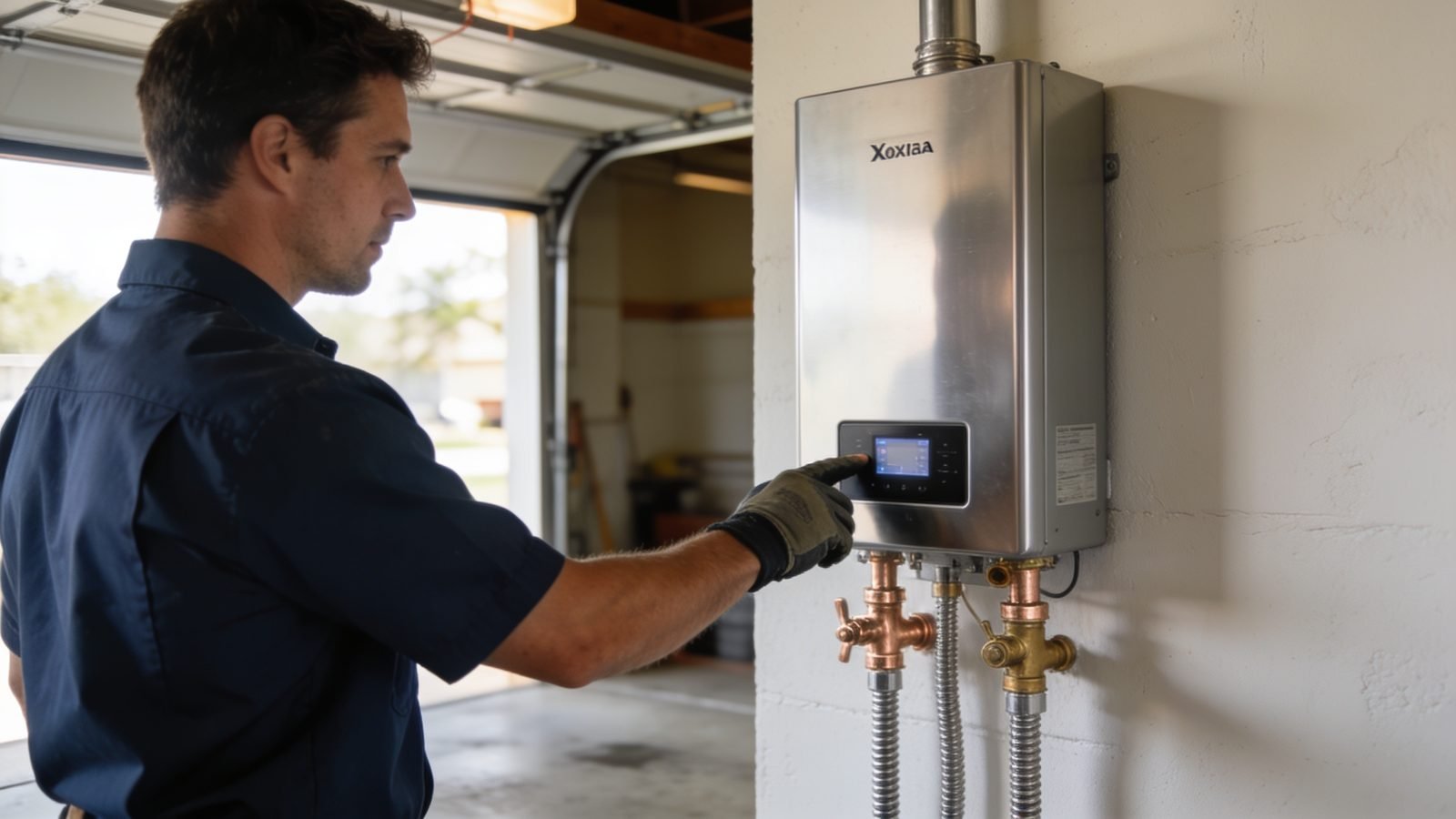
Gas and electric tankless water heaters installed, repaired and descaled across Austin and the northern suburbs. Licensed plumbers, permits pulled, flat quotes before we start.
A tankless water heater is a good decision in Austin for two reasons that have nothing to do with the brochure. Garages here are tight and a 50-gallon tank eats four square feet of floor you would rather use. And a tank sitting in a hot Central Texas garage runs its burner all summer keeping water hot that nobody is using.
It is also an install that goes wrong easily. A 199,000 BTU gas unit will not run on the half-inch gas line most Austin homes built before 1990 were plumbed with. Venting has to be sealed combustion, routed to the outside, with the right clearances. And our water is hard enough that a unit installed without isolation valves cannot be maintained without cutting pipe.
We do this one thing. Every quote starts with the gas line, the vent route and your real hot water demand — then a fixed price, a permit, and an inspection you do not have to be home for.
Six services, all of them tankless. We are not a general plumbing company that also does water heaters.
New tankless units installed, sized and permitted — gas or electric, garage, closet or exterior wall.
Learn more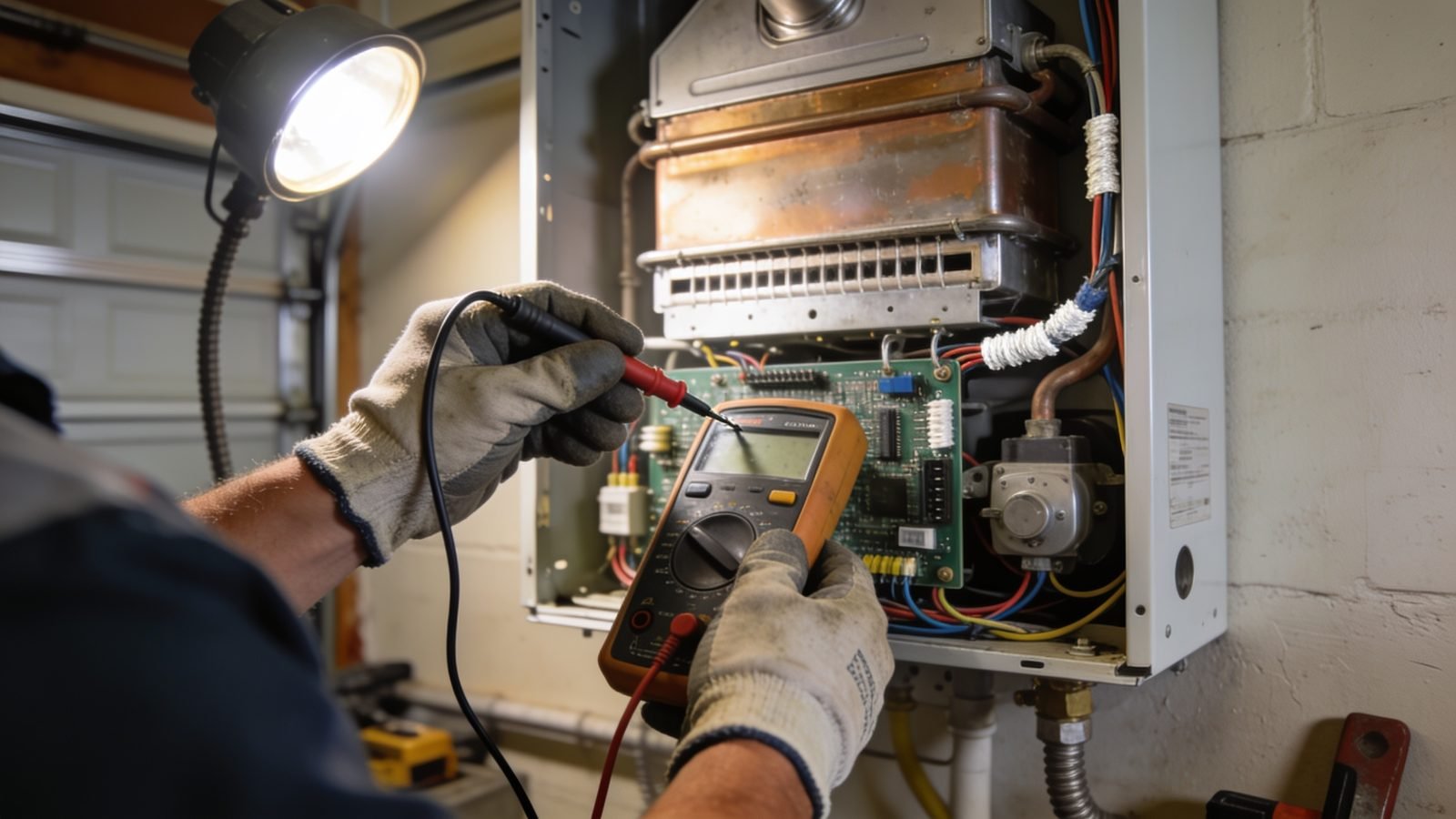
Error codes, cold sandwiches, no ignition, dropping flow — diagnosed and fixed, usually in one visit.
Learn more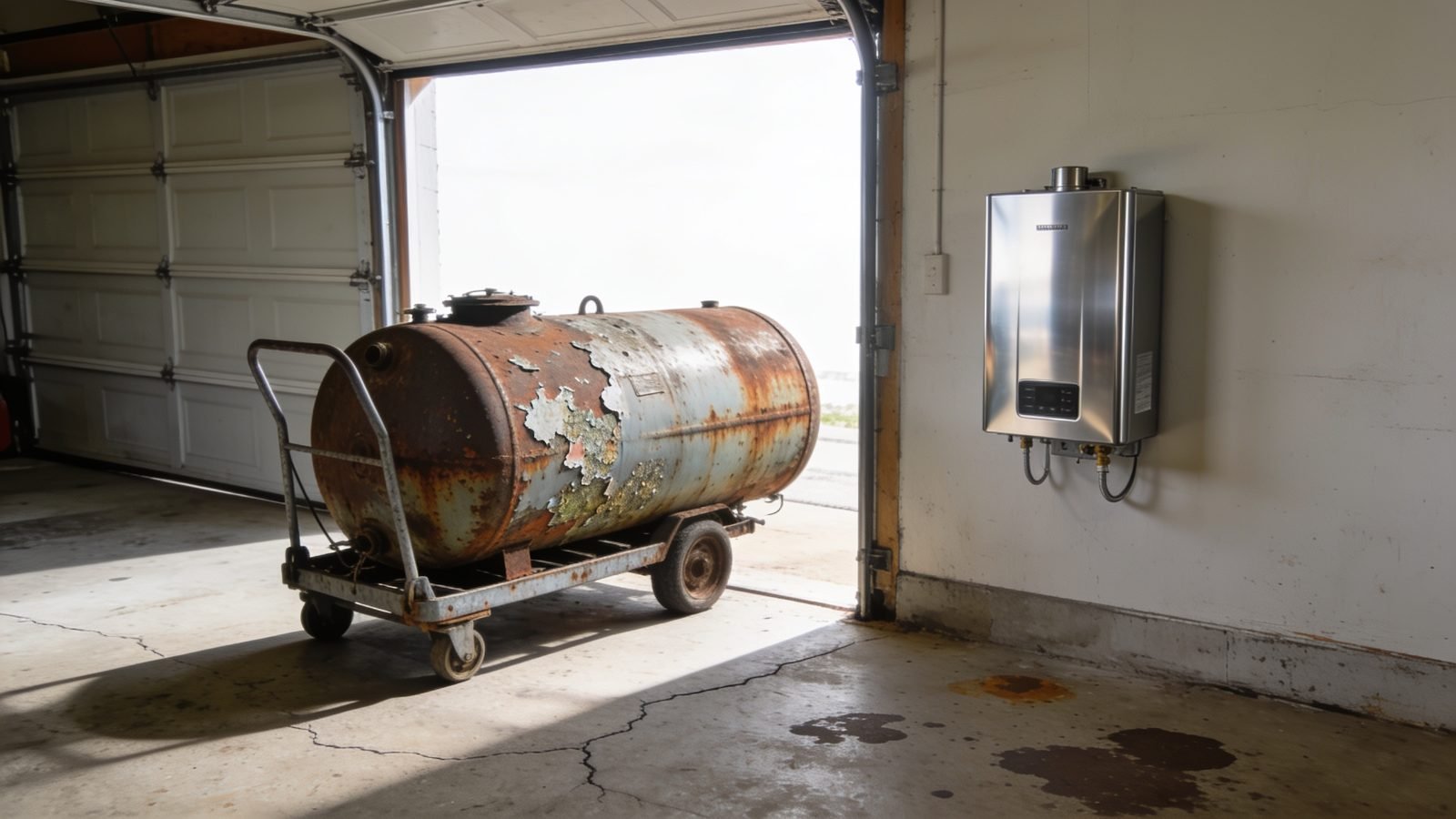
Old tank or worn-out tankless unit swapped for the right size, with the venting and gas work brought up to code.
Learn more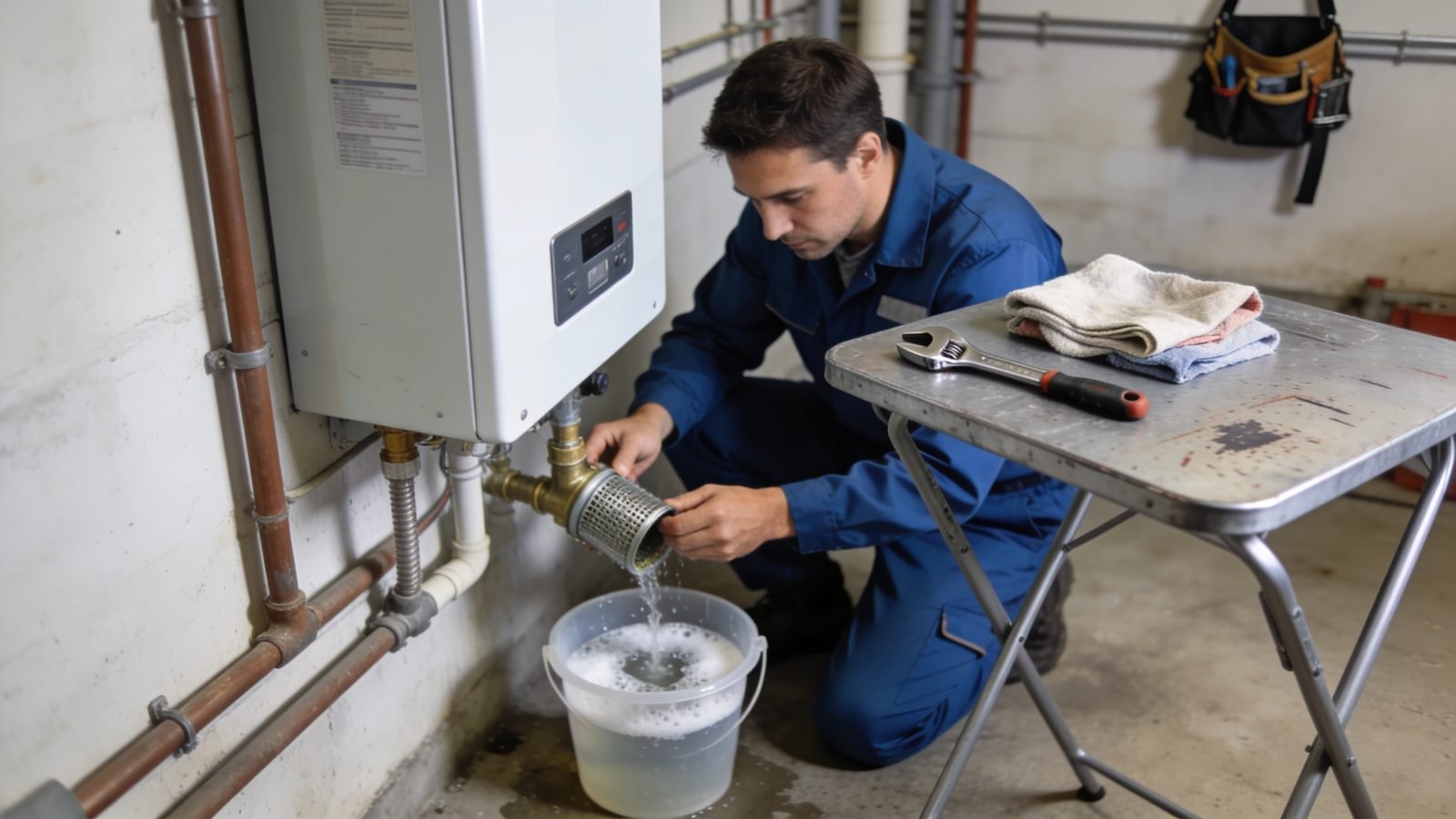
The annual service that keeps the warranty valid: flush, filter, burner, venting, controller and safety checks.
Learn more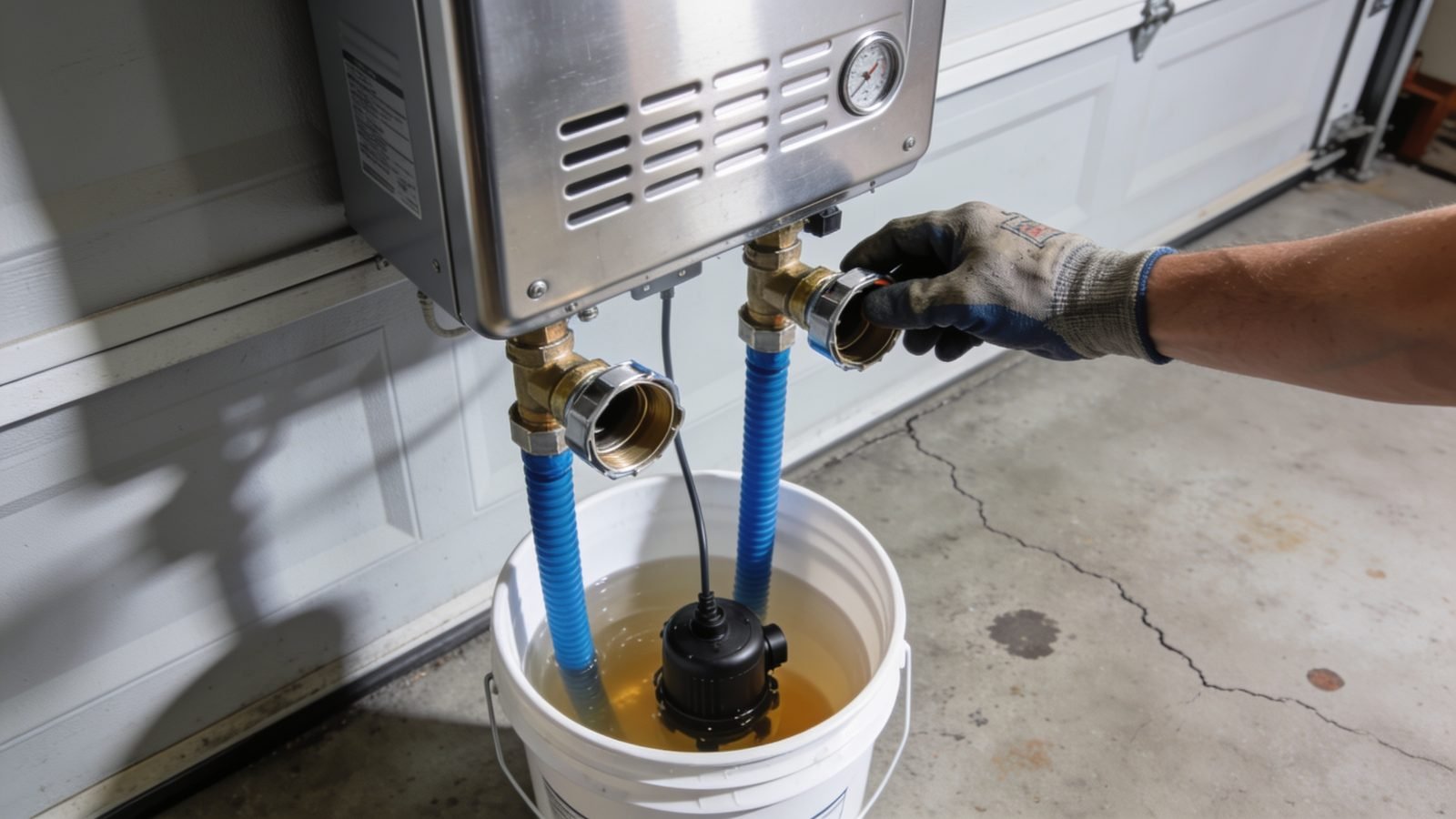
A proper circulating vinegar or solution flush that pulls Central Texas scale out of the heat exchanger.
Learn more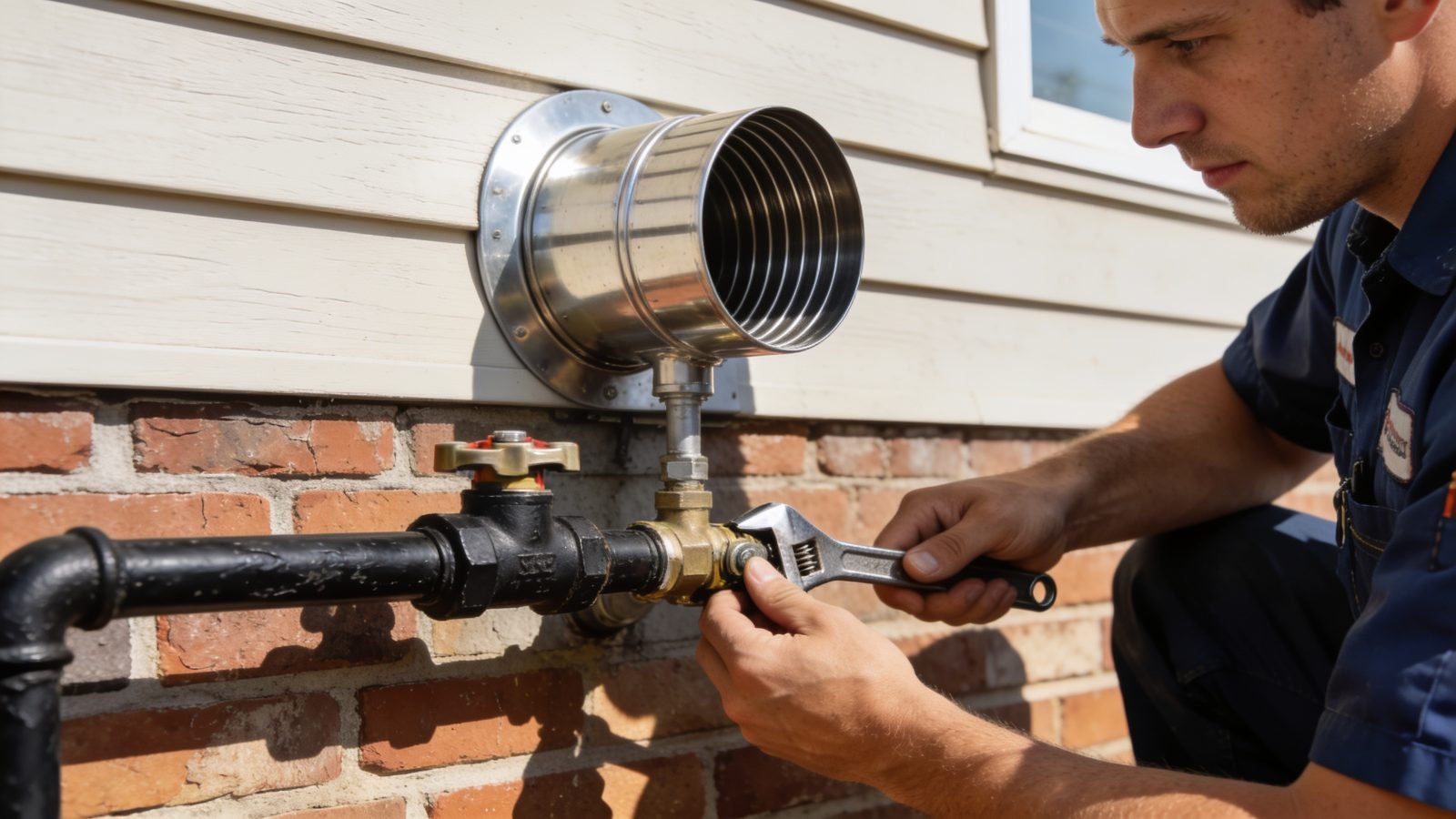
Natural gas and propane units: line sizing, meter capacity, sealed venting and combustion set-up done properly.
Learn moreWater heater replacements need a plumbing permit in Austin and every surrounding city. We pull it under our license and meet the inspector — you never touch the paperwork.
We measure your incoming water temperature and count your fixtures before quoting a unit. An undersized heater is the single most common reason people dislike tankless.
Central Texas water is hard. Every install we do gets isolation valves so the unit can be flushed, and we tell you exactly how often to do it.
You get the price for the whole job — unit, gas or electrical work, venting, permit, haul-away — before anyone starts cutting pipe.
Austin Water treats surface water drawn from the Colorado River at Lake Austin and Lake Travis. It is filtered through Central Texas limestone before it ever reaches the intake, and it arrives at your house carrying dissolved calcium and magnesium — hard water, typically in the range of 8 to 12 grains per gallon depending on the season and which plant served you that day.
In a storage tank, that hardness settles to the bottom as sediment and you hear it as popping. In a tankless unit, the water is heated fast inside a narrow heat exchanger, and the same minerals bake onto the walls of that exchanger as scale. Scale insulates. The burner works harder, the flow rate drops, and eventually the unit throws a temperature or flow error and shuts down.
None of that is a reason to avoid tankless in Austin. It is a reason to install isolation valves on day one and flush the unit once a year. A descaled tankless heater in Central Texas routinely outlives two tanks. An un-descaled one dies early and takes the warranty with it, because most manufacturers require documented maintenance.
How descaling works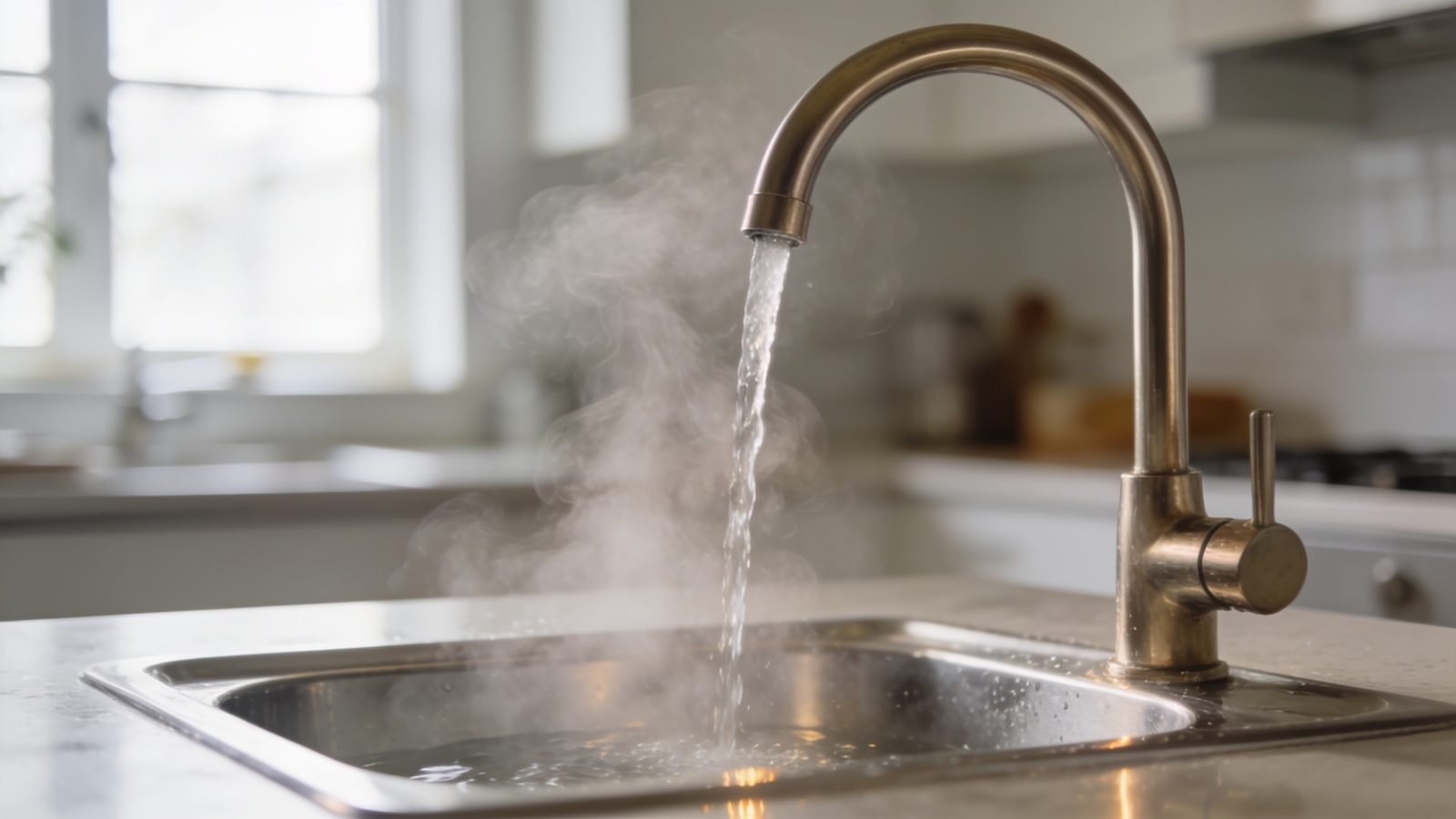
Tell us the house, the fuel, and what is going wrong. Most quotes need five minutes on the phone and a photo of your current heater.
We check gas line size, venting route, electrical capacity and your peak hot water demand, then put a fixed price in writing.
Most changeovers take four to eight hours. Gas line or venting upgrades can add a day. We protect floors and haul the old tank away.
We meet the city inspector, walk you through the controller, and set your first descaling reminder.
Austin and the I-35 and 183 corridors north. If you are outside these six, call anyway — we will tell you honestly whether the drive makes sense.
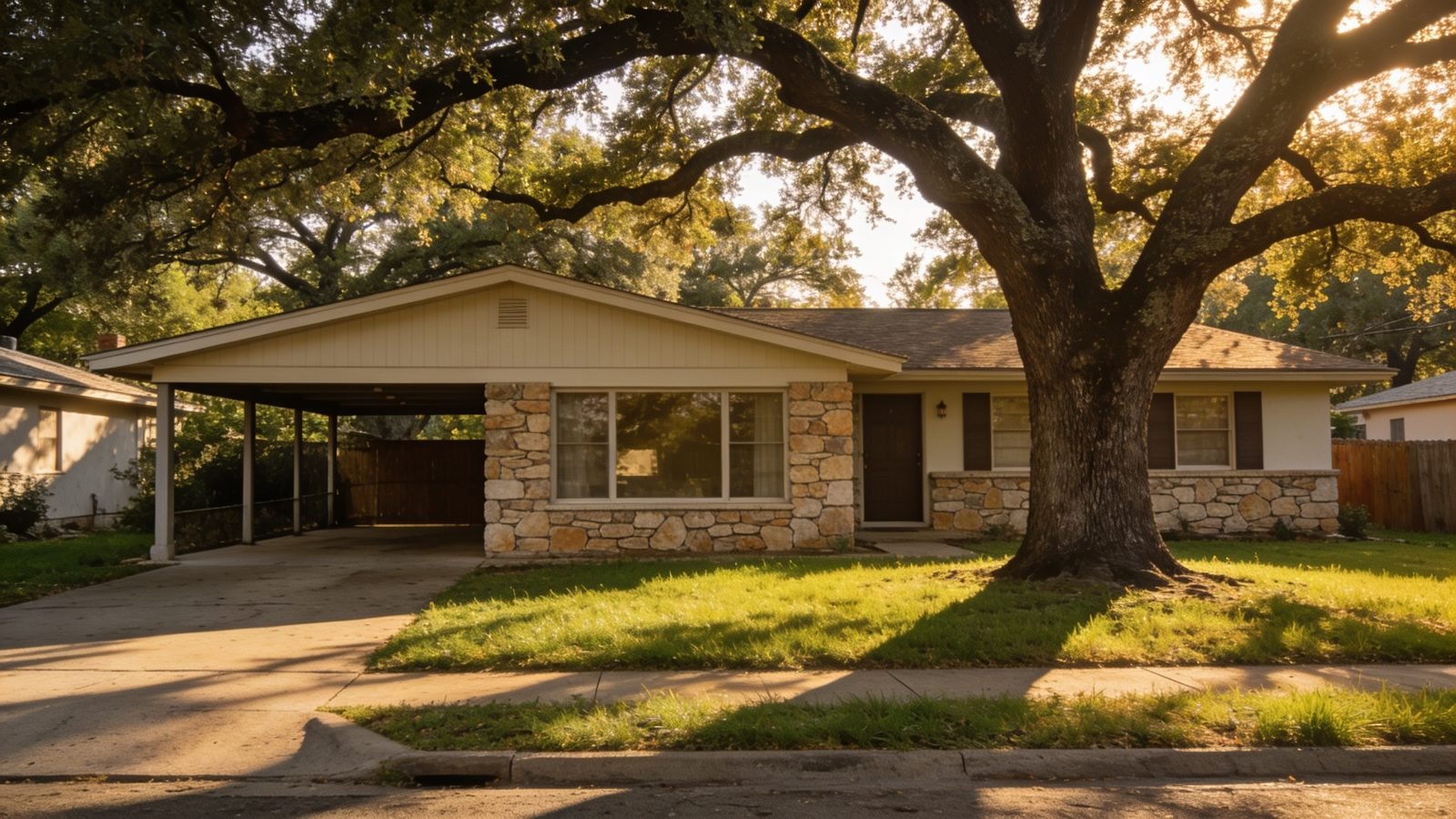
Austin is where most of our work is, and the housing here splits cleanly in two. Central neighborhoods — Hyde Park, Allandale, Travis Heights, Barton...
Local details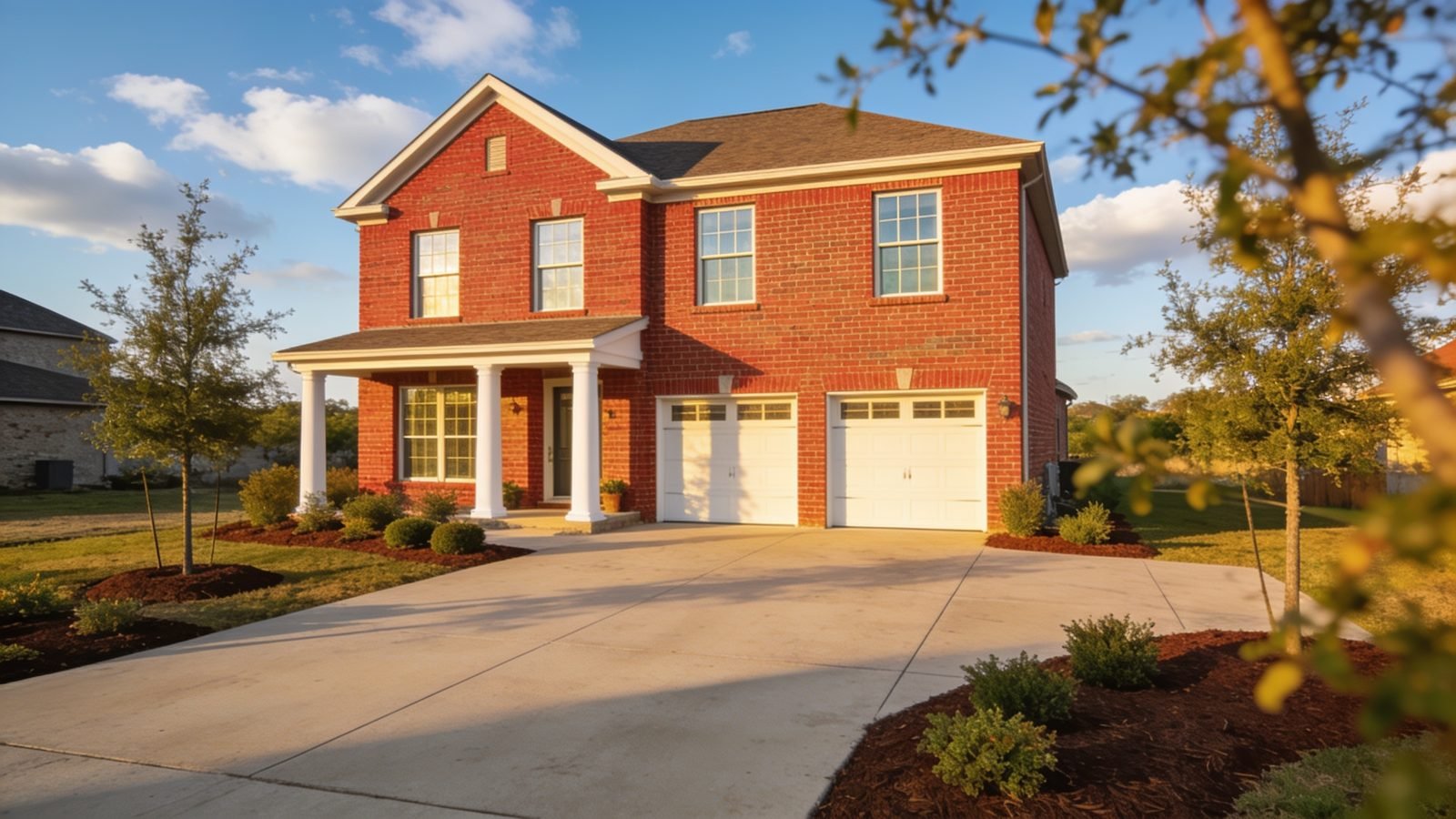
Round Rock is two-story brick, mostly built from the mid-1990s through the 2000s — Forest Creek, Behrens Ranch, Teravista, Sonoma, Chandler Creek —...
Local details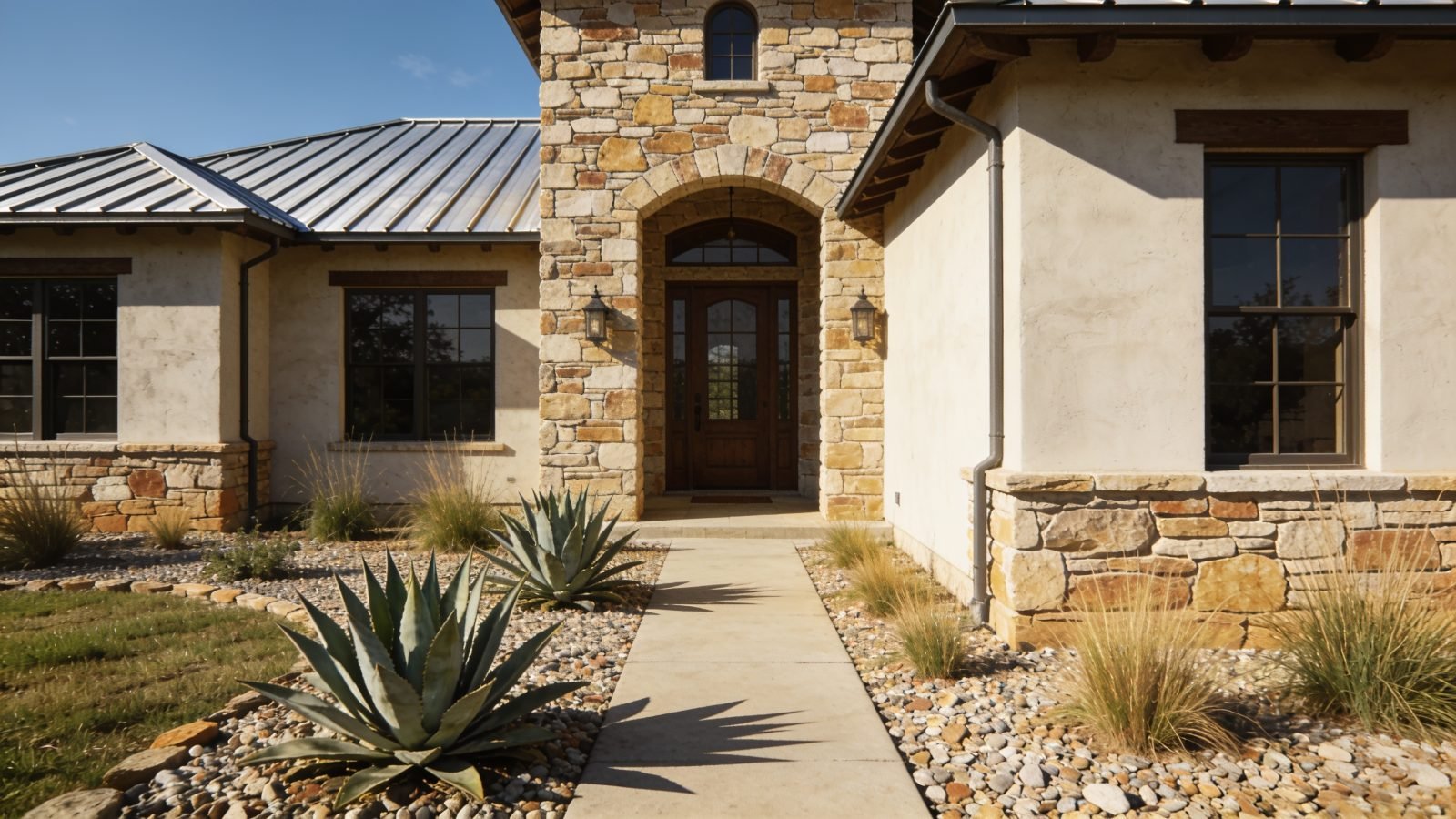
Cedar Park sits on the 183 corridor where the suburbs meet the hill country, and the housing reflects it: Buttercup Creek and the Ranch at Brushy...
Local details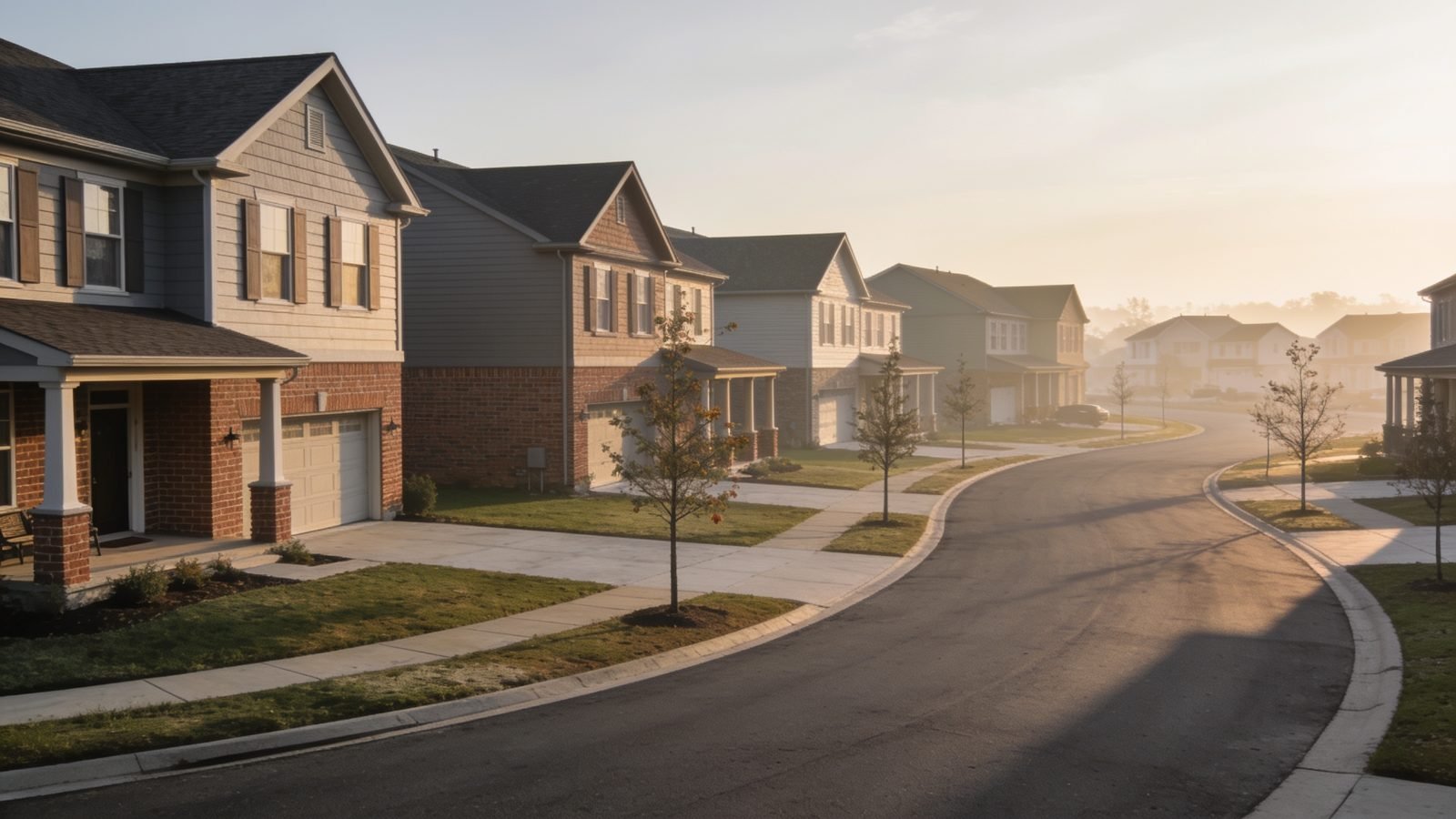
Pflugerville is mostly master-planned and mostly 2000s onward — Falcon Pointe, Blackhawk, Highland Park, Avalon, Sorento — which makes it one of the...
Local details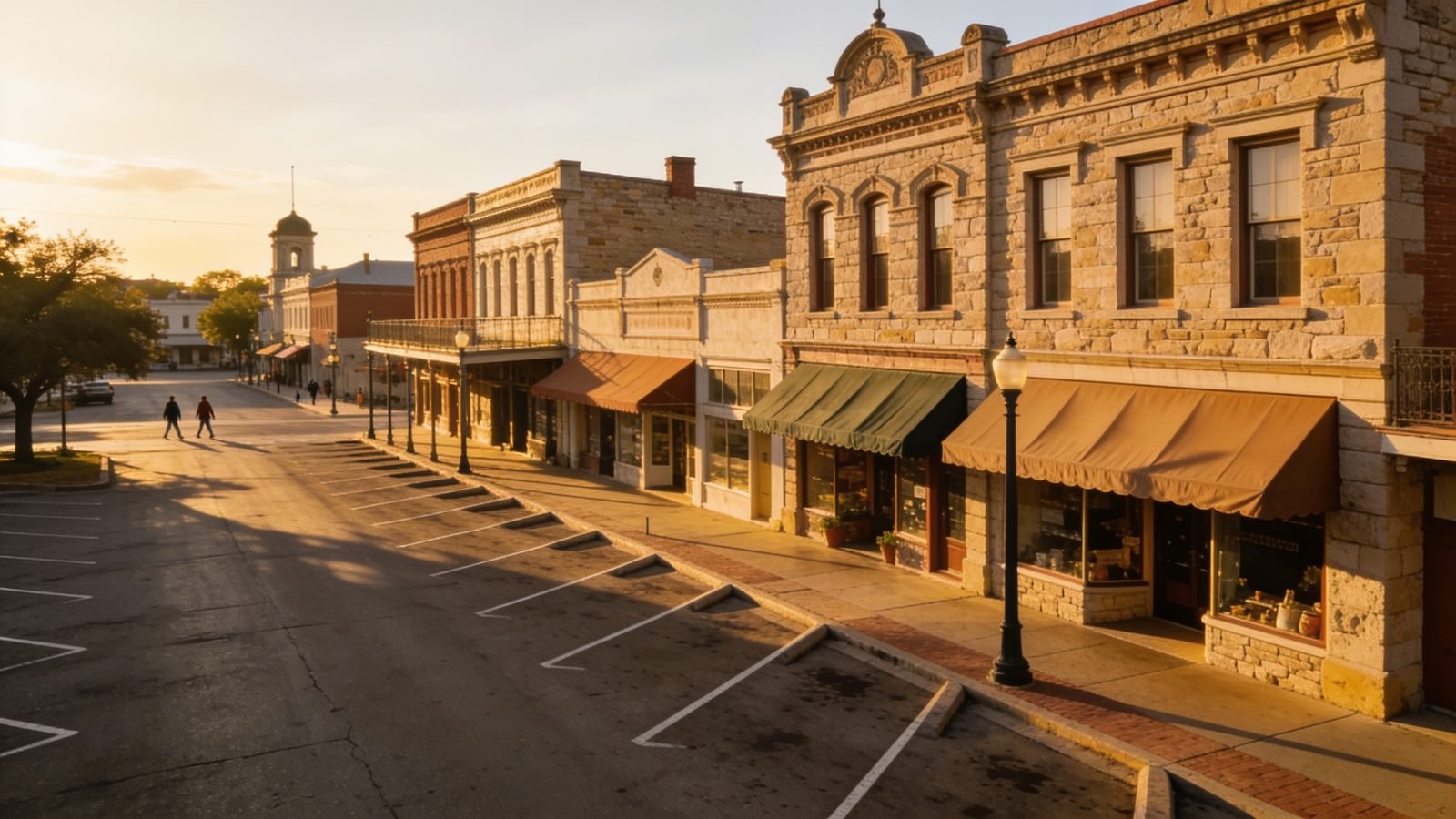
Georgetown gives us three very different kinds of house. Sun City, the large active-adult community on the west side, where thousands of similar...
Local details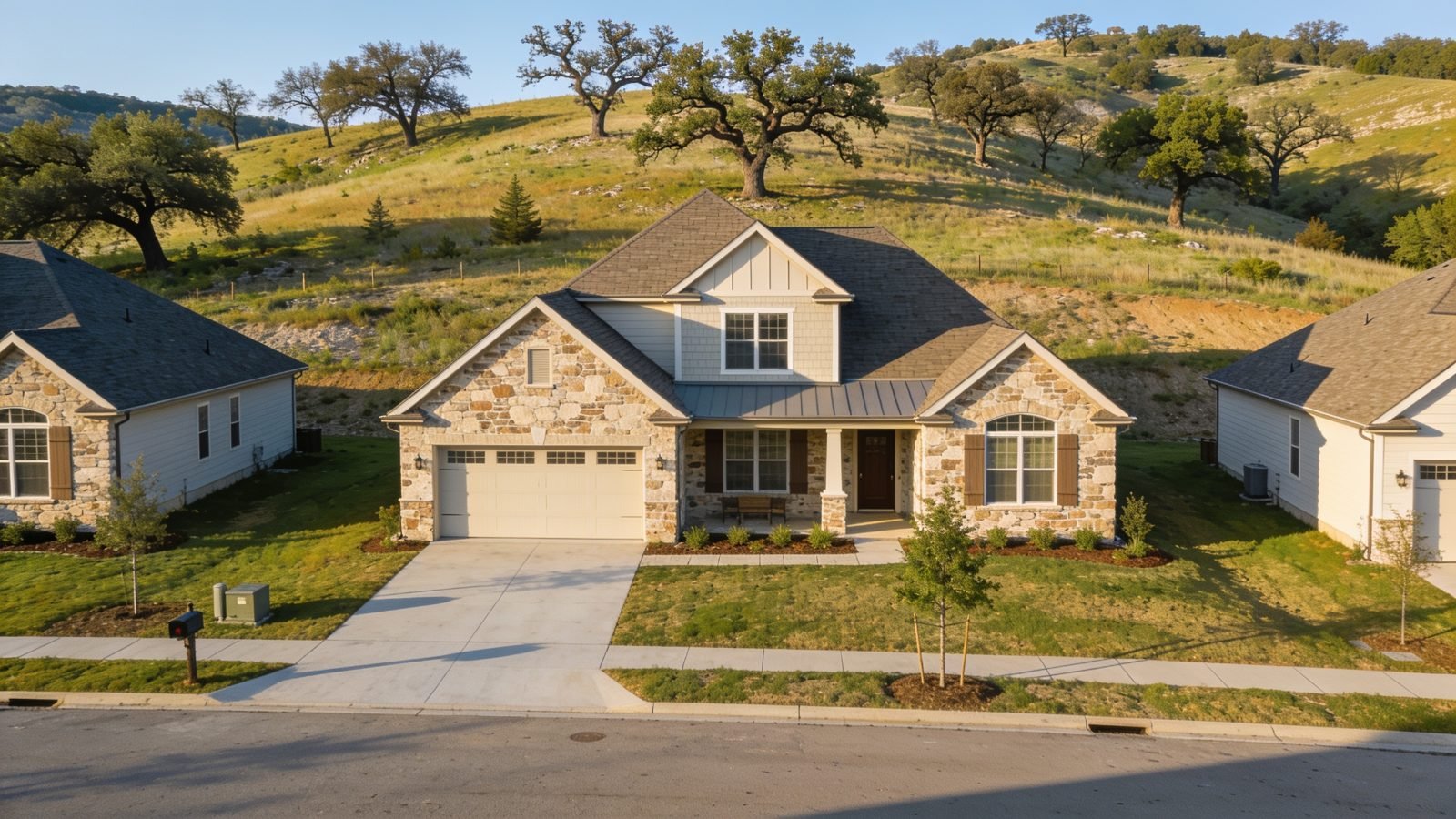
Leander has grown faster than almost anywhere in the country over the last decade, and the housing shows it: Crystal Falls, Travisso, Bryson,...
Local details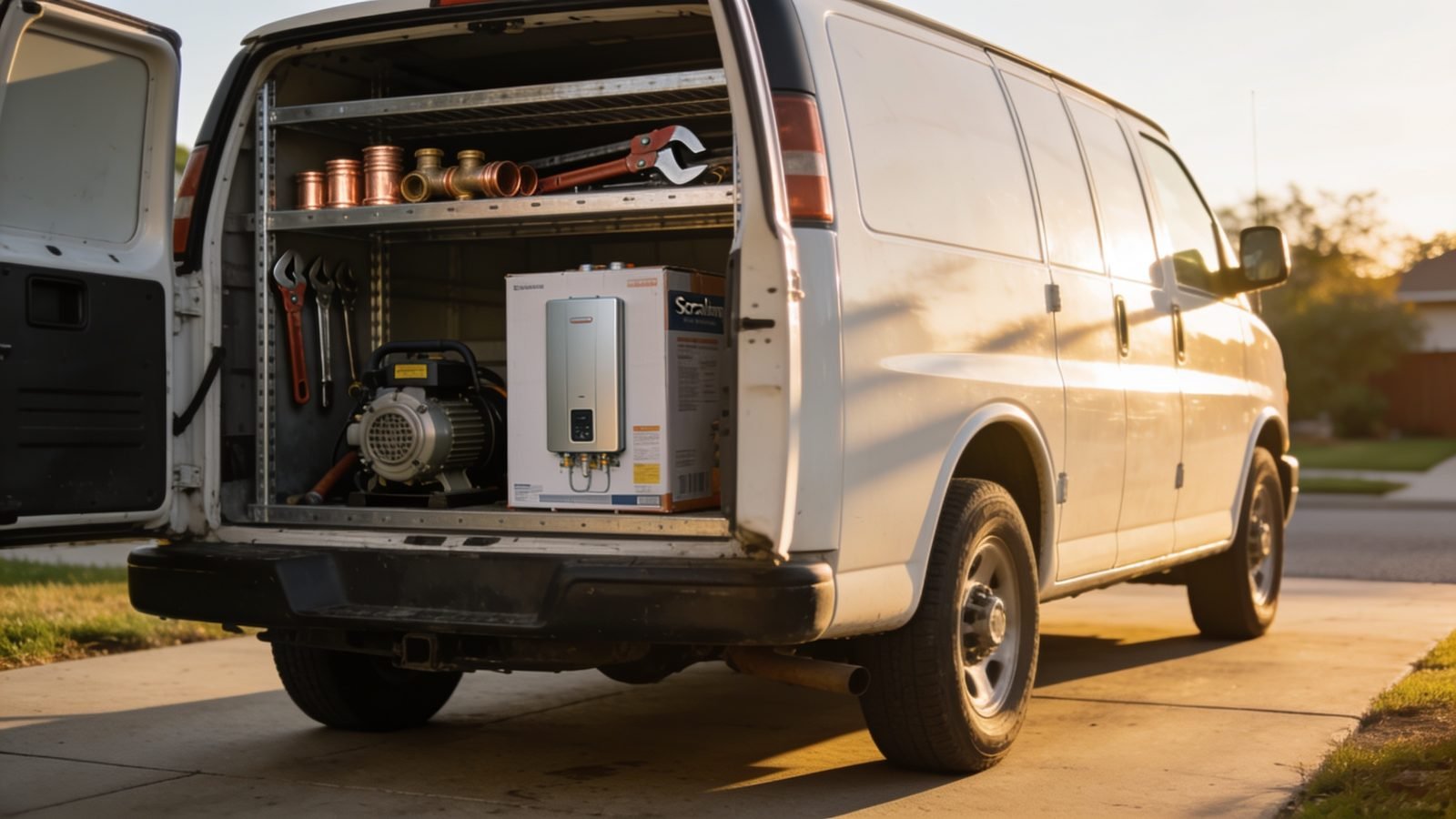
Most plumbing companies in Austin install tankless heaters occasionally, between drain clogs and slab leaks. We install, repair, descale and replace them all day, which is why our trucks carry the flow sensors, igniters, gaskets and descaling kits that turn a two-visit repair into a one-visit repair.
It also means we will tell you when tankless is the wrong answer. If your house has a 100-amp panel and no gas service, or you are selling in six months, a good condensing tank is the better spend and we will say so.
More about how we workFor a straight changeover from a gas tank to a gas tankless unit, most Austin homes land between $3,200 and $5,500 installed, permit included. The spread is almost entirely gas line and venting: a house with a 3/4-inch line and an easy exterior wall sits at the bottom, a two-story with a half-inch line and a long vent run sits at the top. Replacing an existing tankless unit with a new one is usually $2,000 to $3,400. These are planning ranges, not quotes — the number you get from us in writing is the number you pay.
In Austin, usually yes. Incoming water here sits around 72-78°F in summer and 55-62°F in winter, so a 199,000 BTU condensing unit delivers roughly 6 to 7 gallons per minute even in January. Two low-flow showers use about 3.5 GPM together. Add a dishwasher and a kitchen sink at the same time and you are at the edge — that is the conversation we have during the sizing visit, and the reason large houses sometimes get two units.
Yes. The City of Austin requires a plumbing permit for a water heater replacement, and so do Round Rock, Cedar Park, Pflugerville, Georgetown and Leander. Converting a tank to tankless also involves gas and venting work that gets inspected. We pull the permit under our license and meet the inspector. If a contractor offers to skip it to save you a few hundred dollars, that shortcut lands on your disclosure when you sell.
Once a year for most Austin homes on city water. Round Rock and Georgetown, which run harder water, are better off at nine to twelve months. If you have a whole-home softener, you can usually stretch to eighteen months. Skipping it is the fastest way to void a heat exchanger warranty.
Modern units have built-in freeze protection, but it is electric — it does nothing during an outage, which is exactly when it is needed. That is why we install indoors or in the garage wherever the venting allows, insulate any exposed water lines, and show you the two isolation valves to drain if a Uri-style event is forecast. Units mounted on an exposed north wall are the ones that split.
Sometimes, and less often than the internet suggests. A whole-home electric tankless unit for a Central Texas winter needs roughly 27 kW — three 40-amp double-pole circuits and a 200-amp panel with room to spare. Most Austin homes built before 2000 do not have that, and the panel upgrade costs more than the heater. Electric works well for a single bathroom, an addition, or a guest suite where the run from the main heater is long.
Call for a same-week appointment, or send the form and we will come back to you today.